

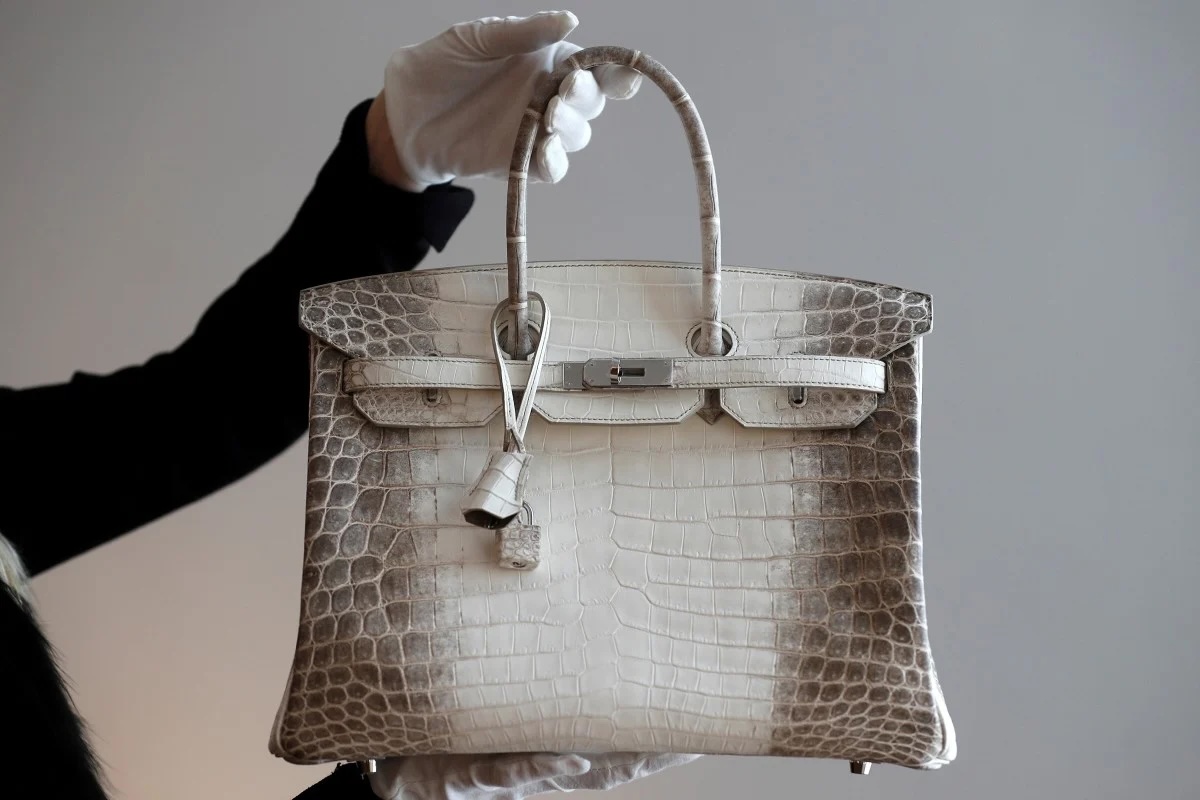
Craftsmanship, scarcity, cultural significance, and investment potential have elevated the Birkin
beyond fashion and into a category of its own.
“What transforms a handbag into one of the world's most sought-after collector's pieces –
admired by luxury enthusiasts, pursued by collectors, and increasingly recognised as an
investment asset?”
Few luxury creations have achieved the status of the Hermès Birkin. More than a handbag, it
represents a unique combination of exceptional craftsmanship, scarcity, cultural significance, and
enduring desirability. For over four decades, it has remained one of the most recognisable and
coveted objects in the world of luxury.
The story began in 1984, when actress and singer Jane Birkin found herself seated next to
Hermès chairman Jean-Louis Dumas on a flight from Paris to London. During a conversation
about the lack of a practical yet elegant handbag, an idea emerged that would eventually become
one of the most iconic designs in fashion history. What started as a simple sketch evolved into a
symbol of refined taste and exclusivity recognised around the world.
Part of the Birkin's appeal lies in the way it is created. Each bag is handcrafted by a single artisan
from start to finish using traditional saddle-stitch techniques and carefully selected materials.
Production remains intentionally limited, and access to the most sought-after models often
requires more than simply entering a boutique. This carefully managed scarcity has helped
preserve the Birkin's desirability across generations.
Yet craftsmanship and exclusivity tell only part of the story. In recent years, the Birkin has
increasingly attracted attention as a luxury asset. While many fashion purchases depreciate over
time, selected Birkin models have demonstrated remarkable resilience and value growth. Market
reports indicate that some of the most desirable Birkin 25 and Birkin 30 models have appreciated
significantly over the past several years, reinforcing their position among the most sought-after
assets in the luxury sector.
According to market data, resale prices for the Birkin 25 have more than doubled since 2019,
while selected Birkin 30 Togo models recorded value increases exceeding 60% between 2021
and 2024. Such performance has increasingly positioned the Birkin among the most resilient
assets within the luxury sector.
For collectors, understanding what drives value is essential. Neutral colours such as Black, Gold,
and Etoupe continue to attract strong demand, while rare colours, limited editions, and exotic
materials often command substantial premiums. Size, condition, rarity, and provenance all play
an important role in determining long-term desirability. As with fine watches, jewellery, or art,
the most exceptional examples tend to generate the strongest interest from collectors worldwide.
Beyond its financial performance, the Birkin occupies a cultural position that few luxury objects
have ever achieved. It is simultaneously a fashion icon, a collector's item, and a recognised
symbol of craftsmanship and achievement. Unlike trend-driven products that rise and fall with
changing consumer preferences, the Birkin has maintained its relevance decade after decade,
continuing to captivate both established collectors and first-time buyers.
Perhaps this is what makes the Birkin truly exceptional. It exists beyond seasonal fashion cycles
and temporary trends. It is an object valued not only for what it represents today, but also for the
heritage, craftsmanship, and rarity it will continue to represent in years to come.
In a world increasingly defined by rapid consumption and constant change, the Hermès Birkin
remains remarkably unchanged. More than forty years after its creation, it continues to stand as
one of the clearest examples of enduring value in modern luxury.
Privé members benefit from privileged access to exclusive Hermès Birkin editions, including
rare and highly sought-after collector's pieces available to explore within the Shopping section.